“The loss you don’t know about is no less a loss, but costs you nothing and so it causes you no pain.”
Margaret Renkl
“I remind myself sternly to attend to what is not dying, to focus as much on the exquisite beauties of this earth as on its staggering losses. Life is not at all a long process, and it would be wrong to spend my remaining days in ceaseless grief.”
Margaret Renkl
WARNING: PHOTOS OF DEAD BIRDS AHEAD
Birds today are facing many threats, including habitat loss, climate chaos, and predation. One of their main obstacles is navigating our built environments.
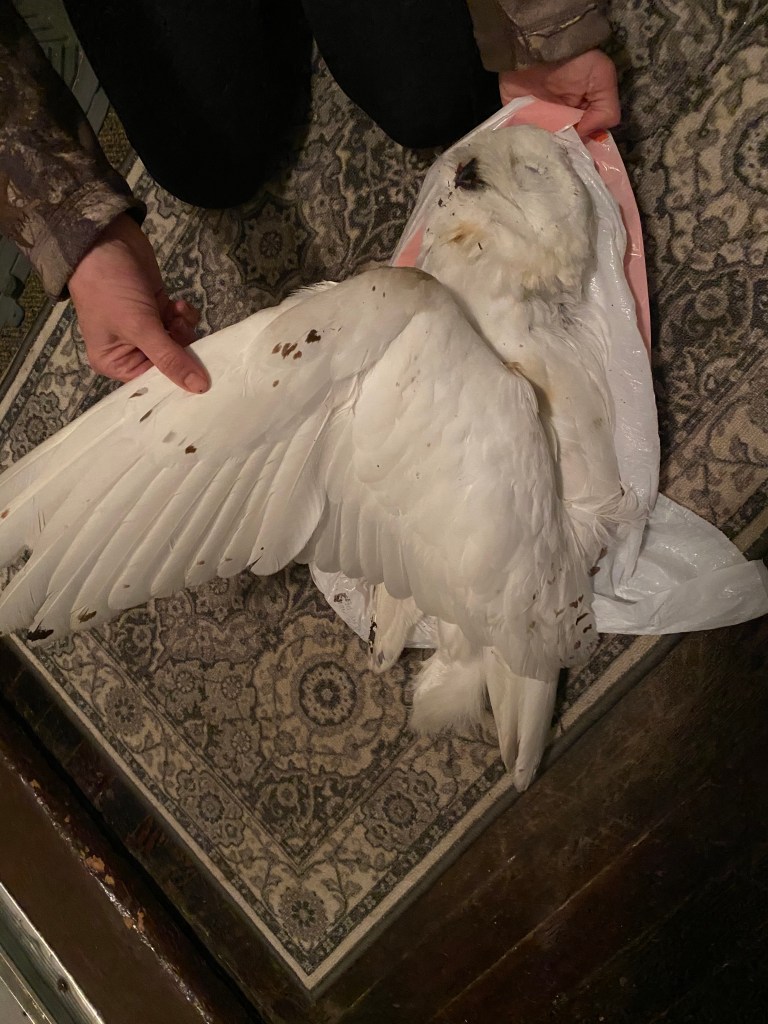
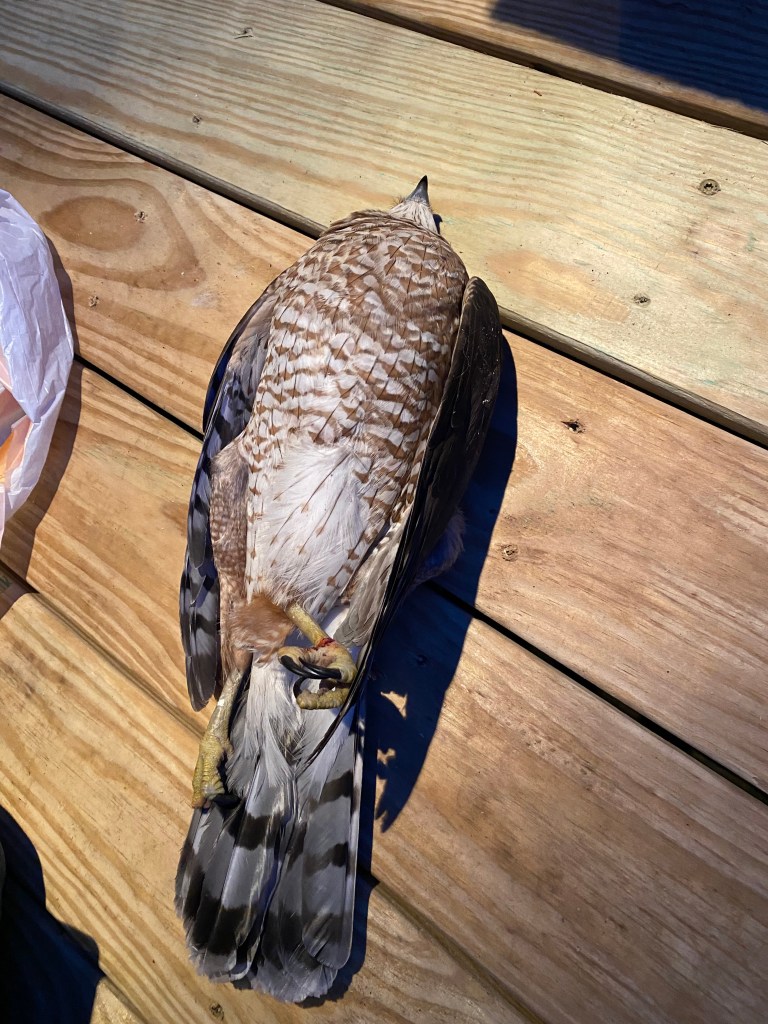
For many of us living in these environments, it is easy to be disconnected from the natural world. For most of my life I did not even think about “nature.” It was separate from me, some other place I could go visit, or not. My attention has since shifted and I spend a great deal of time observing urban wildlife. This practice of witnessing has taught me that not only are we connected, but in competition for the same resources. We all need access to food, water, shelter and space to live. It is no coincidence that many major cities share a defining feature, Rivers. Our River is so vital it gave the city it’s names-Detroit, or “strait” in French and before that, Waawiyaatanong by the Anishinaabek peoples, or “where the curved shores meet.” Situated on two migration flyways, the Atlantic and the Mississippi, the Detroit River and its namesake city is important habitat for migrating birds. Every Spring and Fall, there are Rivers of Birds flying above us, whether we notice them or not. Bird migration is such an event that it can even be seen on weather radars.
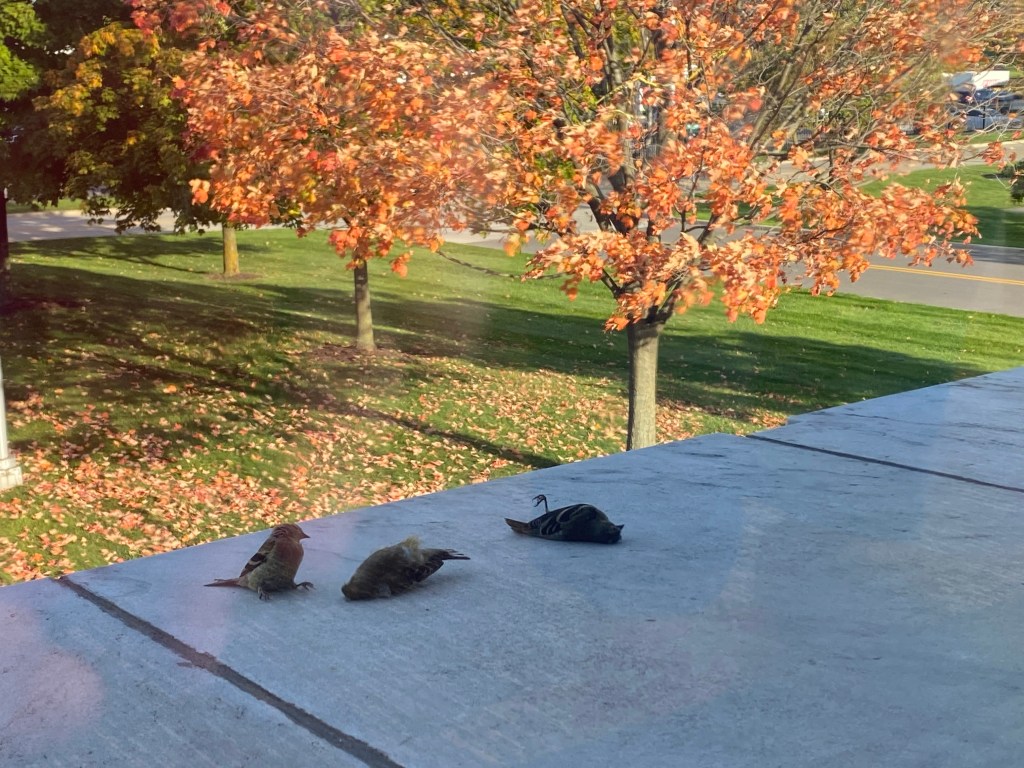
Migration is very difficult for birds though, and up to a third won’t complete their journey. Some will die of natural causes, weather or predation. But, many will die unnatural deaths too. It’s estimated that up to 1 BILLION birds die each year after colliding with windows. Most birds migrate at night, and artificial light can cause confusion for them. They also collide with glass and windows during the day, when habitat is reflected like a mirror and they fly right into them.
When I first started birding, I read an article about birds being trapped in the 9/11 Memorial light in New York, and the efforts to save them. In 2017, Beacon Park (developed by DTE Energy) installed a similar light beam, smaller, but permanent. Seeing this light beam out my window every night, I wondered if it had a similar affect on birds here.
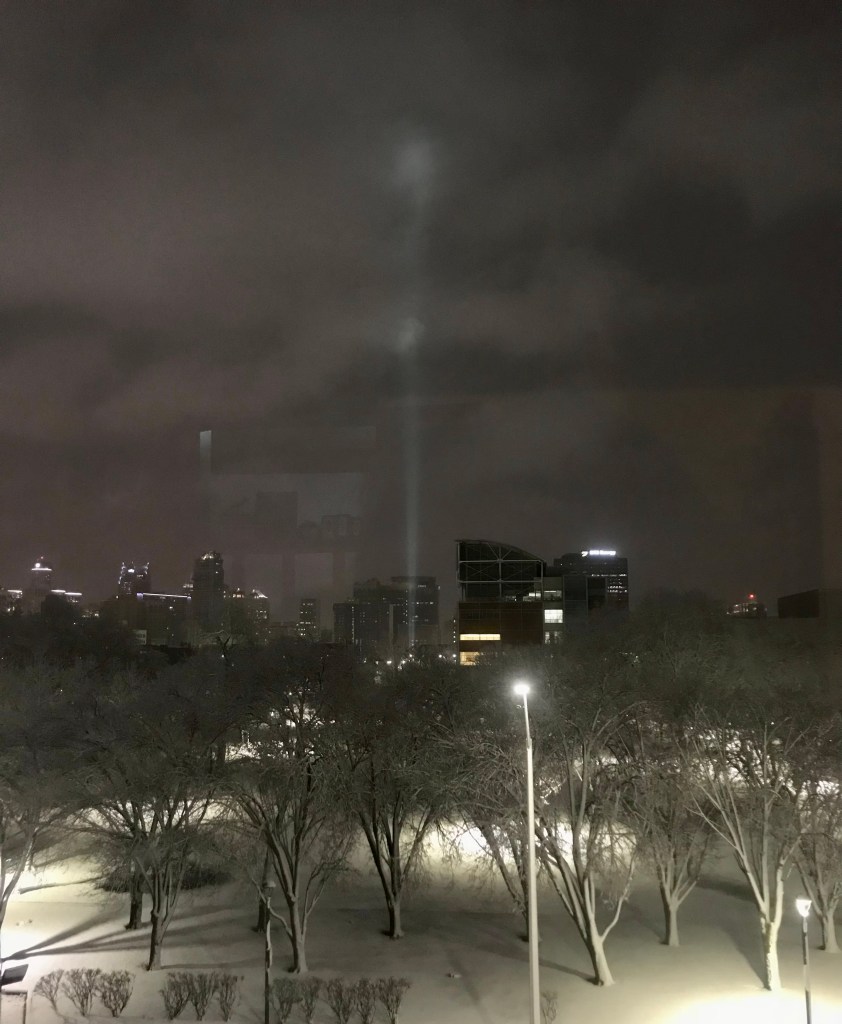
After some googling, I decided to reach out to our local Audubon chapter. Beacon Park was not on their agenda, but they suggested I volunteer for their Safe Passage Program anyway. I honestly never knew window collisions were an issue until then. Volunteers would walk a specific route, collect data, and collect the birds’ bodies for the Biology department at Wayne State University. While we collected data, the Audubon Society was working to convince the University to make its buildings more safe for birds.
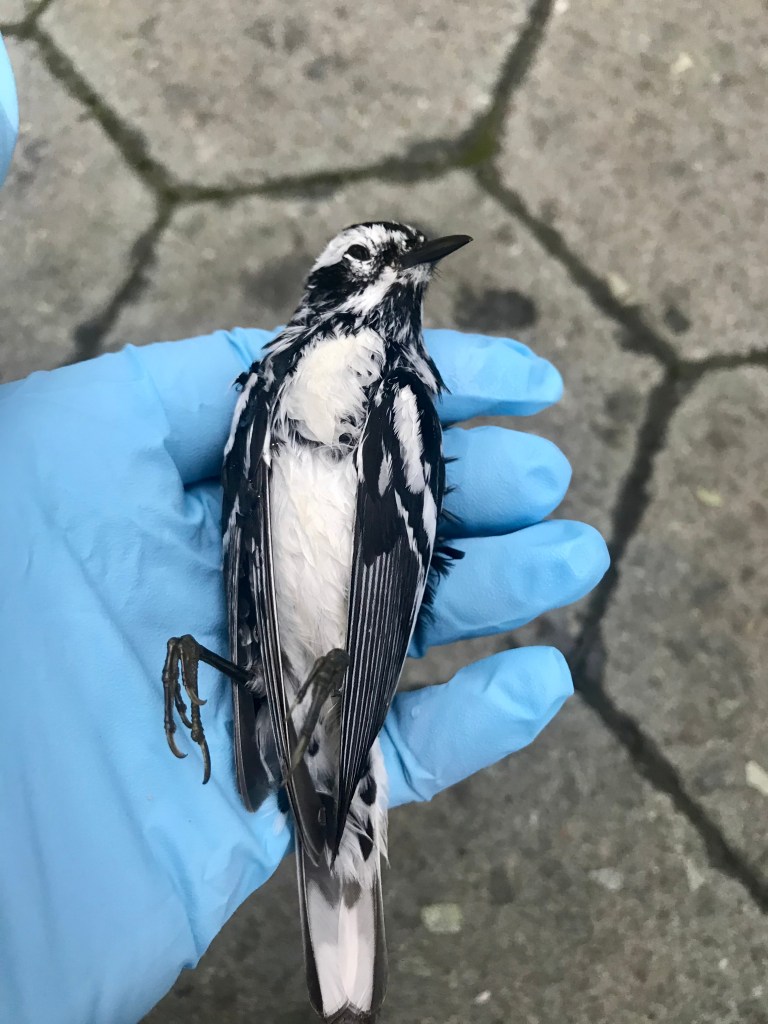
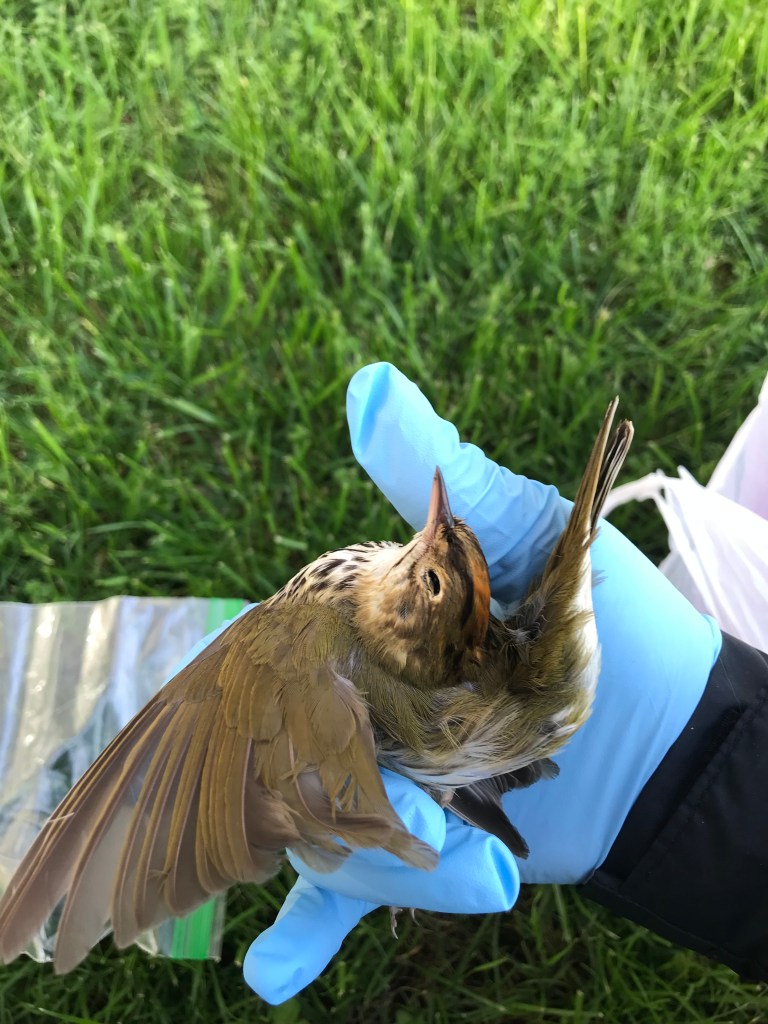
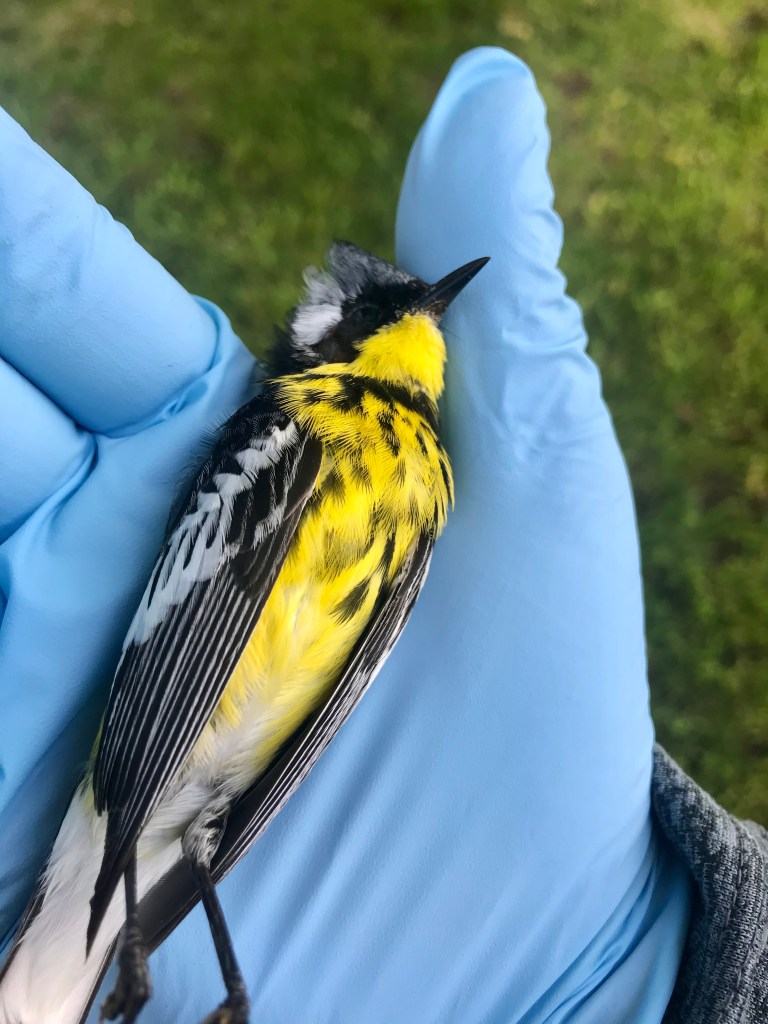
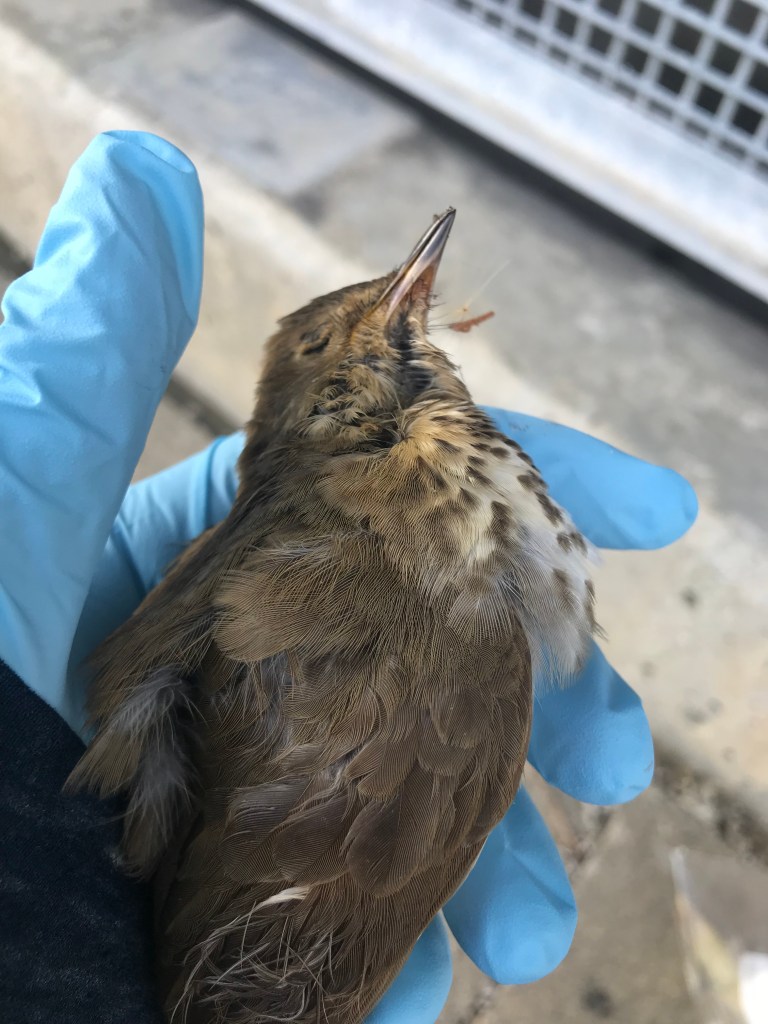
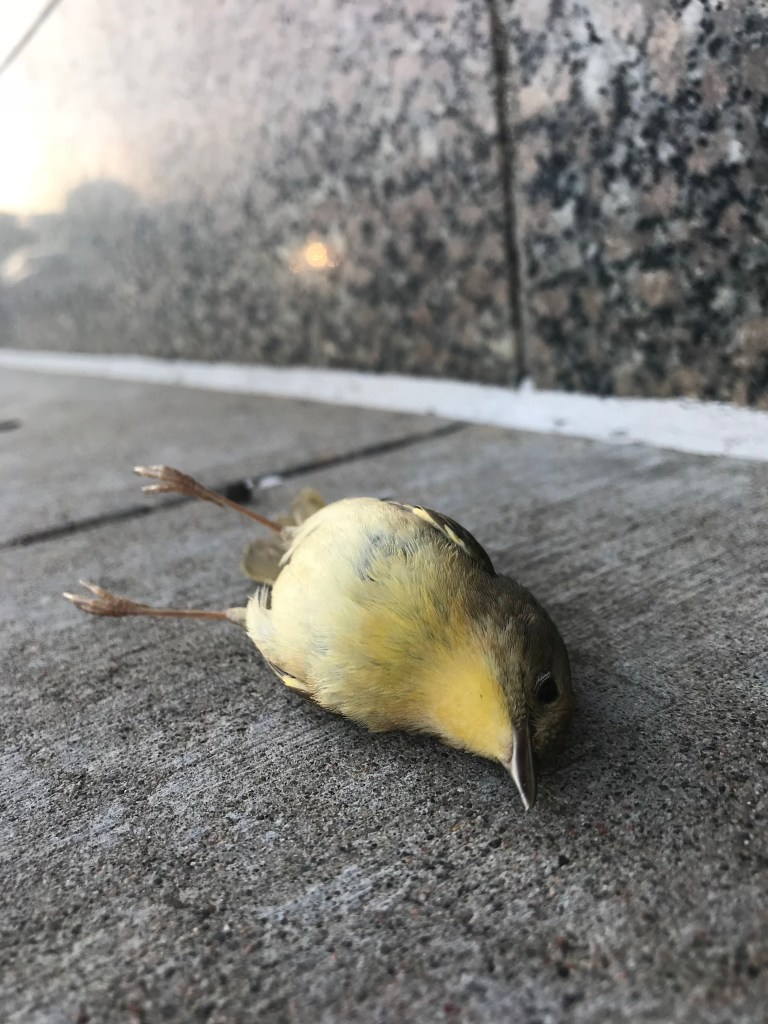
Disheartened after 3 years of collecting data, I no longer volunteer. As far as I know, no buildings on the route I walked have been made bird safe yet. My eyes had been opened to window collisions though, and I started noticing them everywhere. I saw window strike victims on walks around my neighborhood, birds dead after crashing into public schools, government buildings, a hotel.
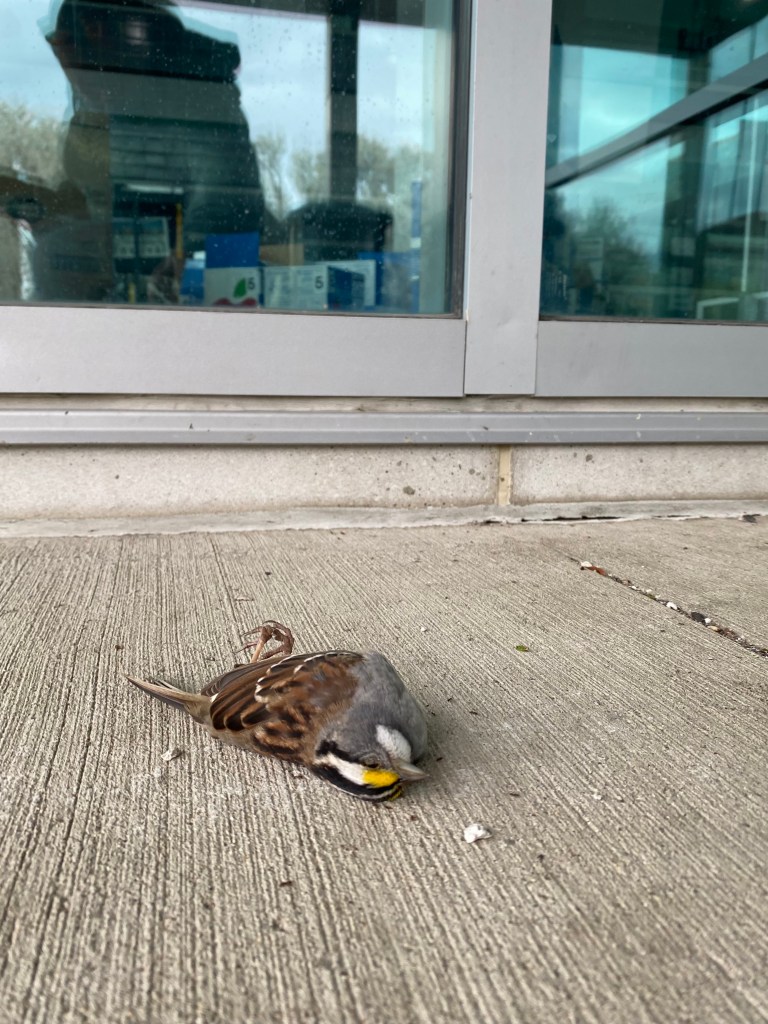
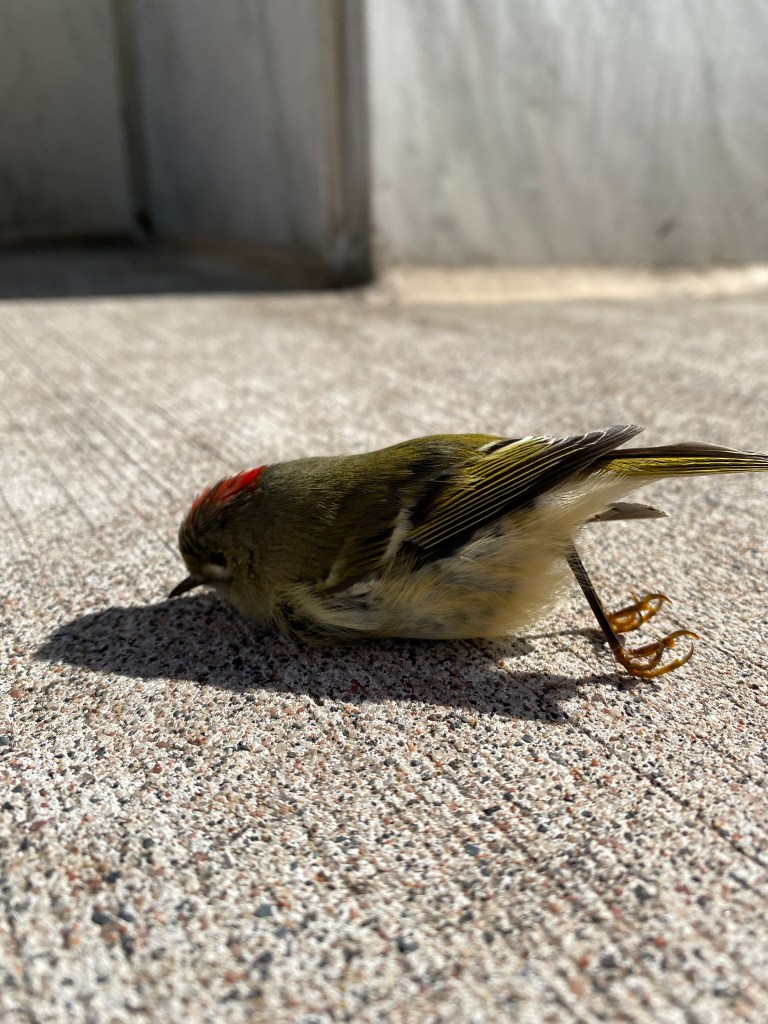
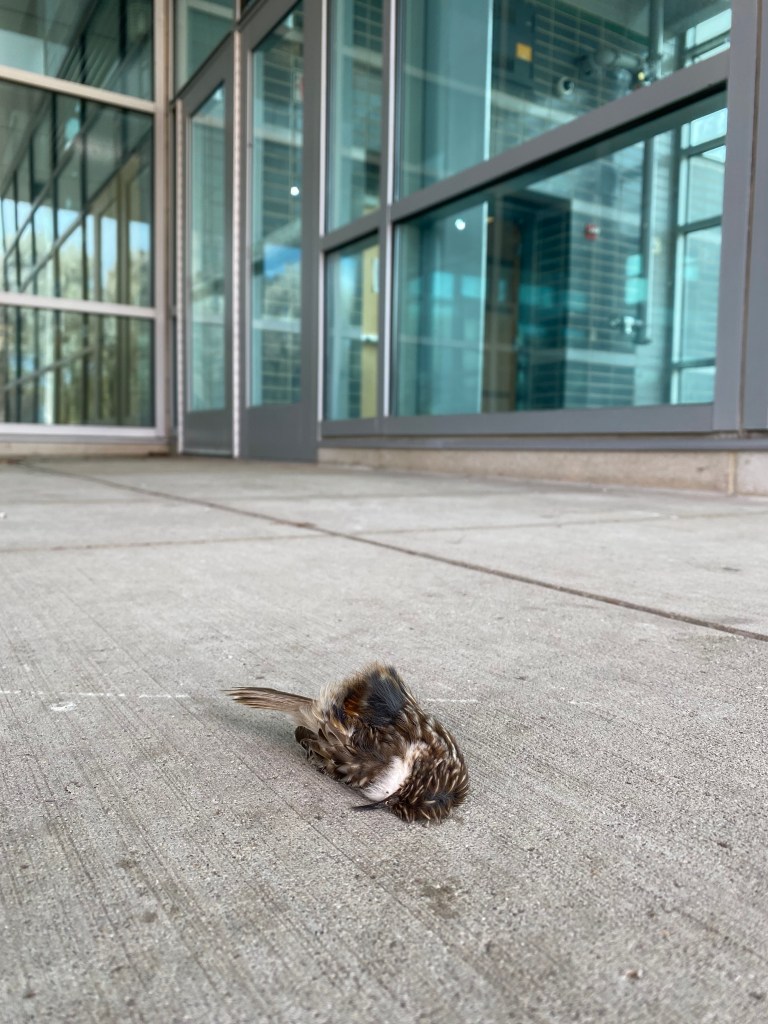
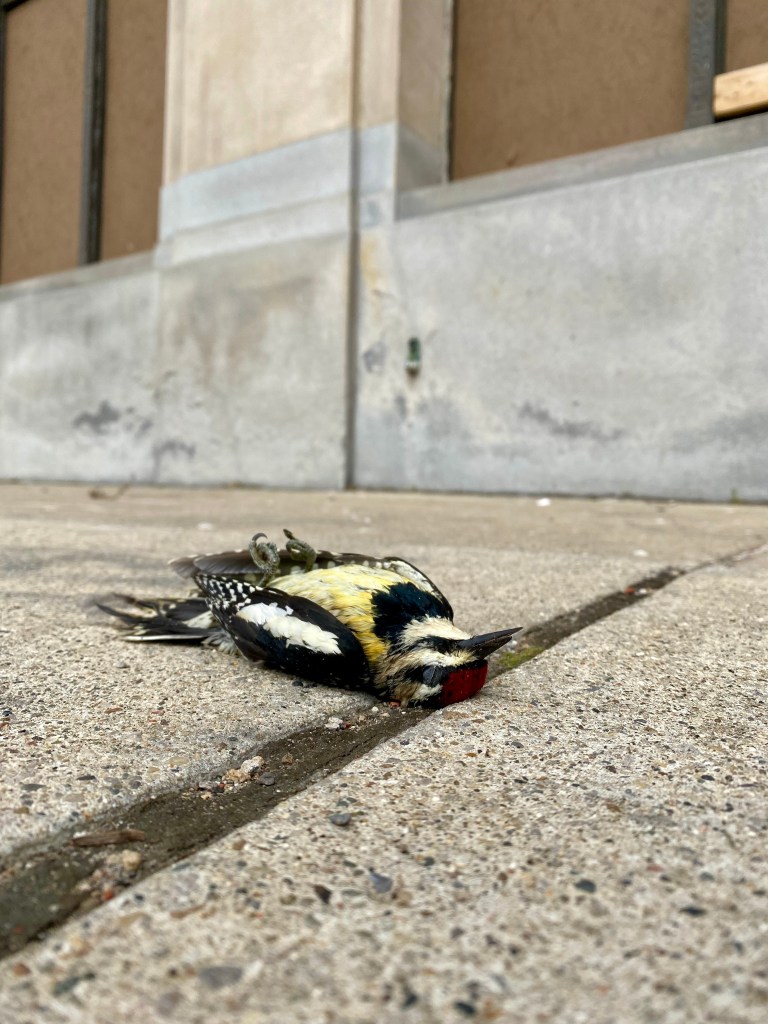
I started recalling times I’d witnessed window strikes on vacation, thinking then that it was just a random occurrence.
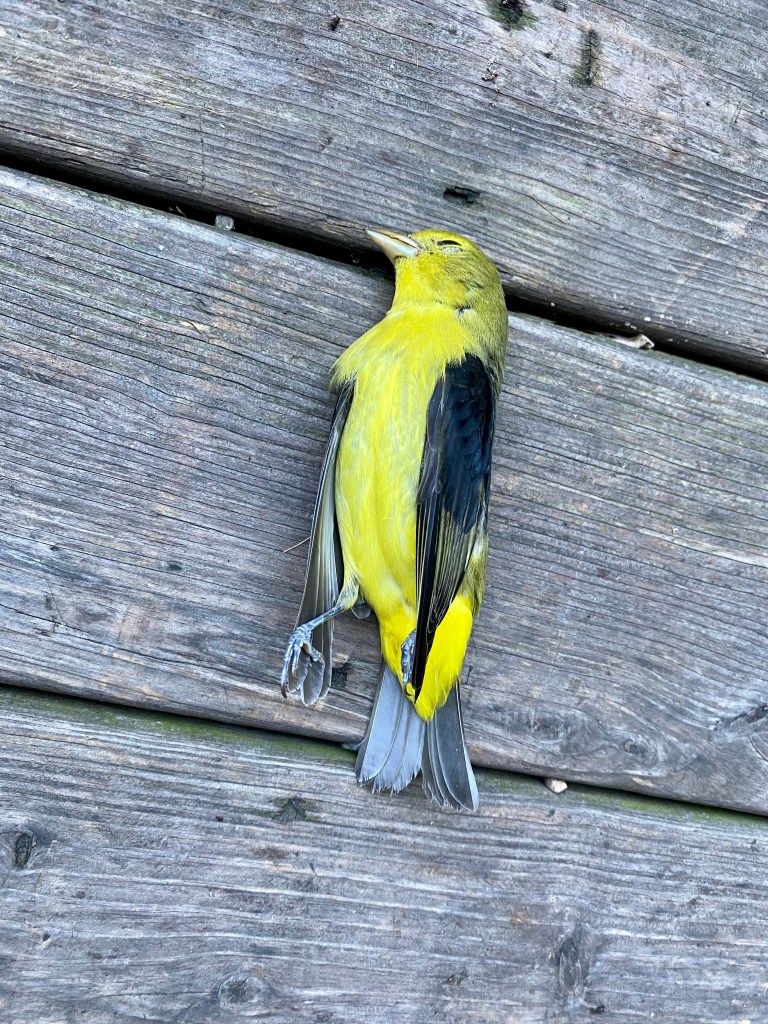
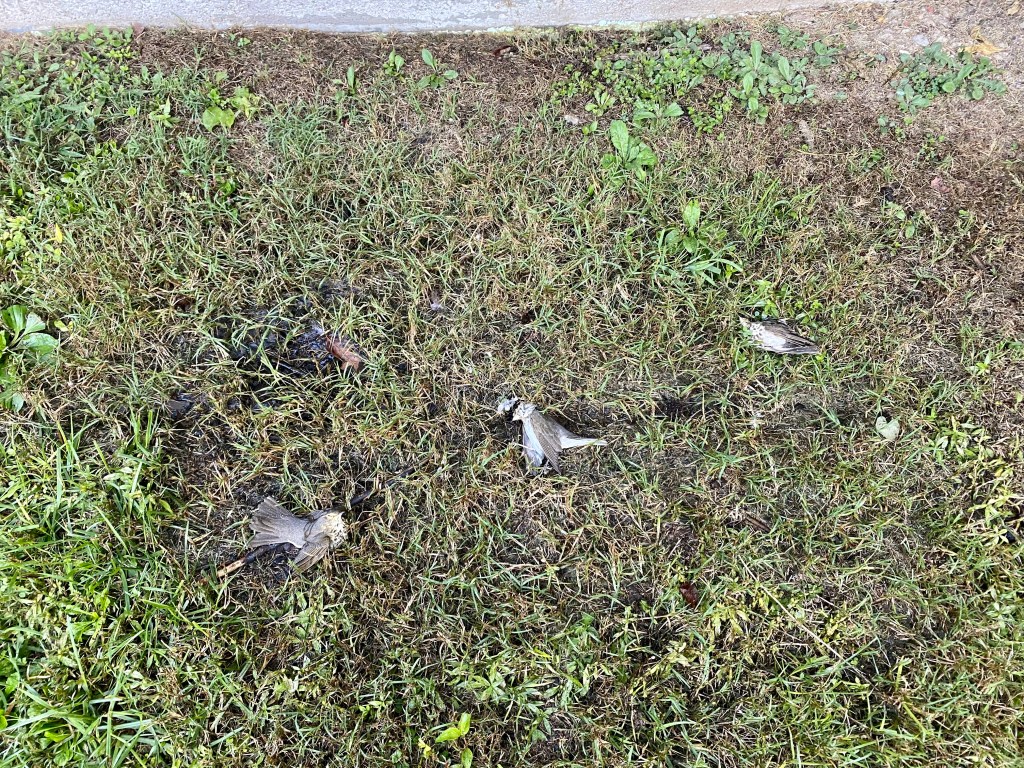
At work, I find them on walks around our building.
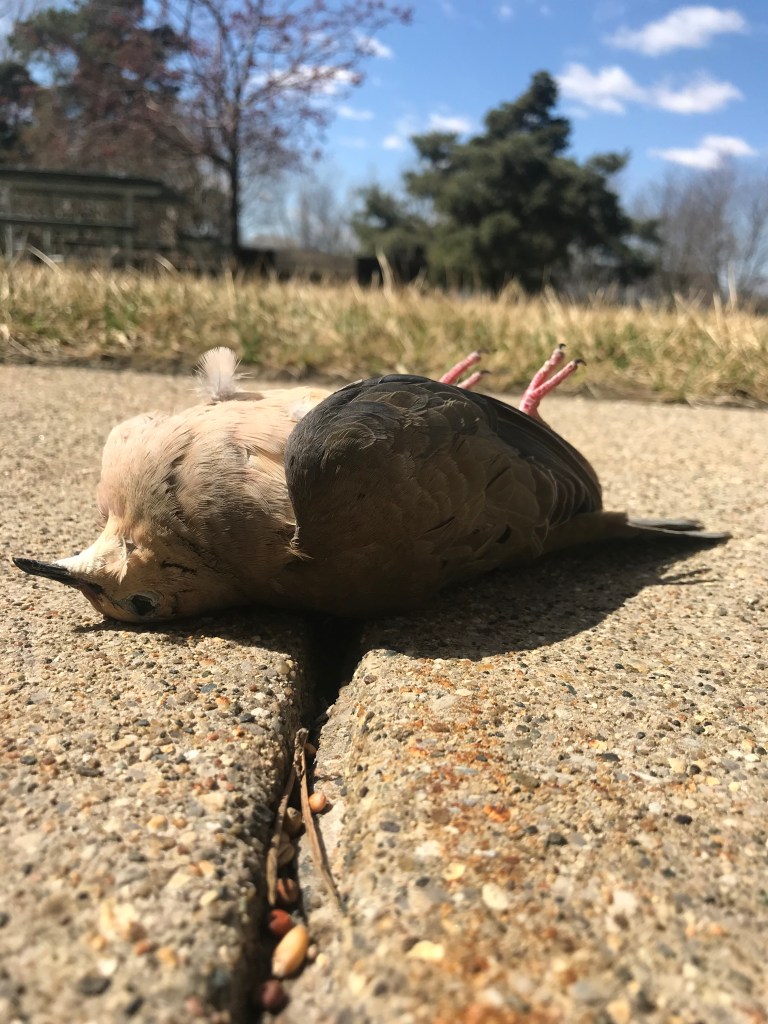
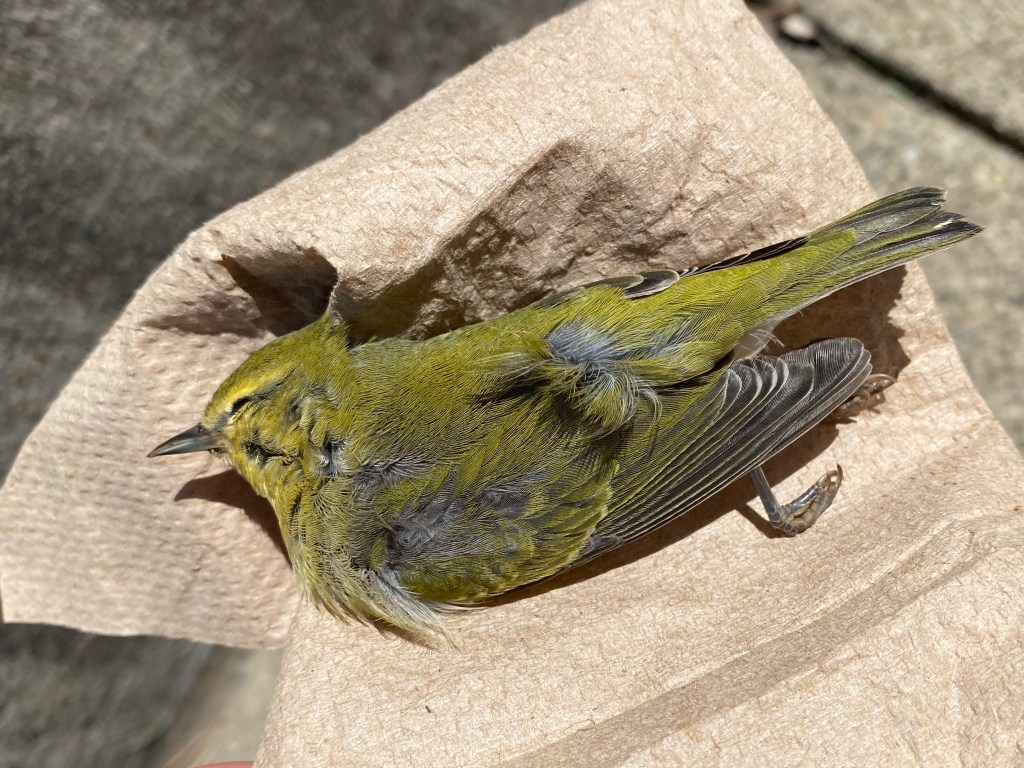
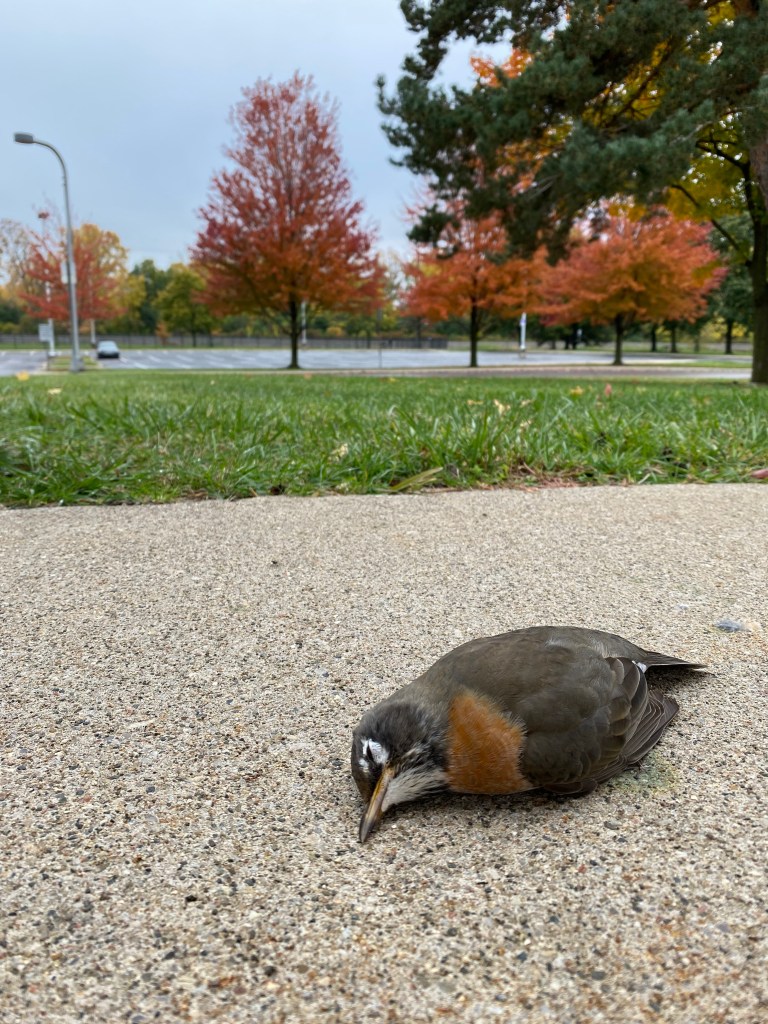
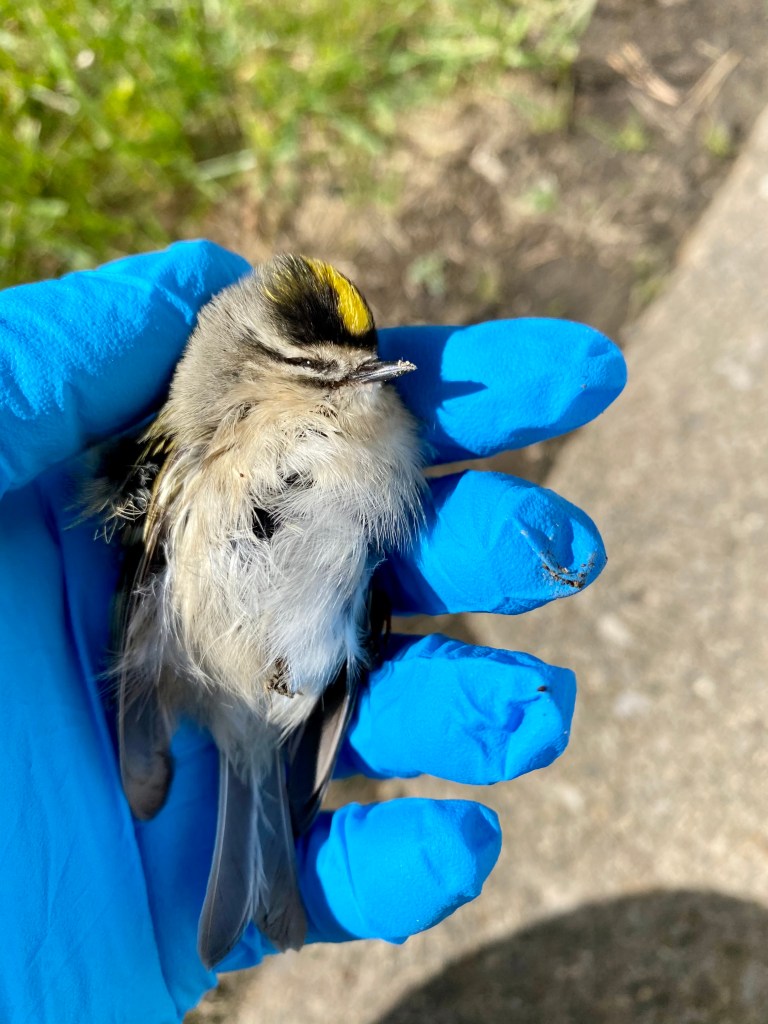
I have held birds dead that I’ve never or rarely seen alive, birds that flew all the way to South America and back, just to die here, after crashing into a Casino.
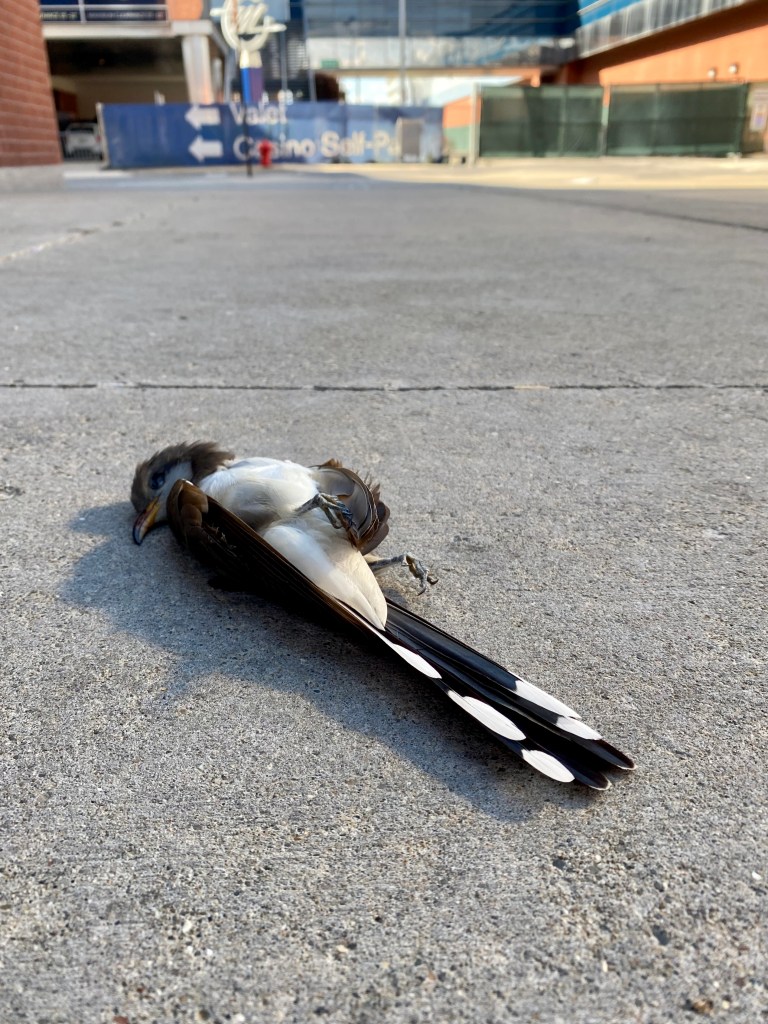
They feel almost weightless in your hand, somehow still fragile. To love nature, especially urban nature can feel like being in a constant state of loss. What do you do with the knowledge that just by existing in this world you’re contributing to the death of everything else?
I am out of my element here. I am not an expert. I don’t know how much I can change. I’m not an activist, a leader, I’m not well connected, I don’t have a solution, or know how to make things change. But I do know that I can’t look away. I can raise awareness, try to make people care. I can teach what I’ve already learned, and guide others to resources I’m familiar with. Collectively maybe we can find a way to make some change.
This is a large scale problem, but we can make some changes on a personal level. Over half of all window strike deaths are attributed to home windows. We can make our own homes more safe for birds.
Have you found a dead bird in the past and thought it was a random incident? Birds fly into windows because habitat is being reflected. Some windows will be more problematic than others. Simply not having feeders and water sources near windows can make a difference. The fix could be as simple as putting up a screen or decals to break up the reflection. Do a little research and take regular walks around your home to assess which windows are a problem. There are a number of products available on the market for problematic windows.
Another thing we can do is document and collect data. There are a number of projects using citizen science to try to tackle this issue.
Last year, a local journalist contacted me while working on an article about bird window collisions. They were able to pull the data from one of these sites and use it as a source for their article. One of the questions they asked me was why all the strikes seemed to happen in one area. In fact, the strikes are happening everywhere but we were only able to collect data in one area. Imagine how much more effective the press could have been if more data were available. Now, I upload every window strike victim I find to several websites.
The first site I use is Birdmapper.org and is used by many organizations. A similar site that I also use is Dbird, which is similar to eBird. iNaturalist is very popular, and scientists are pulling from this citizen scientist data more regularly, so I upload it there under a Window Collision project as well.
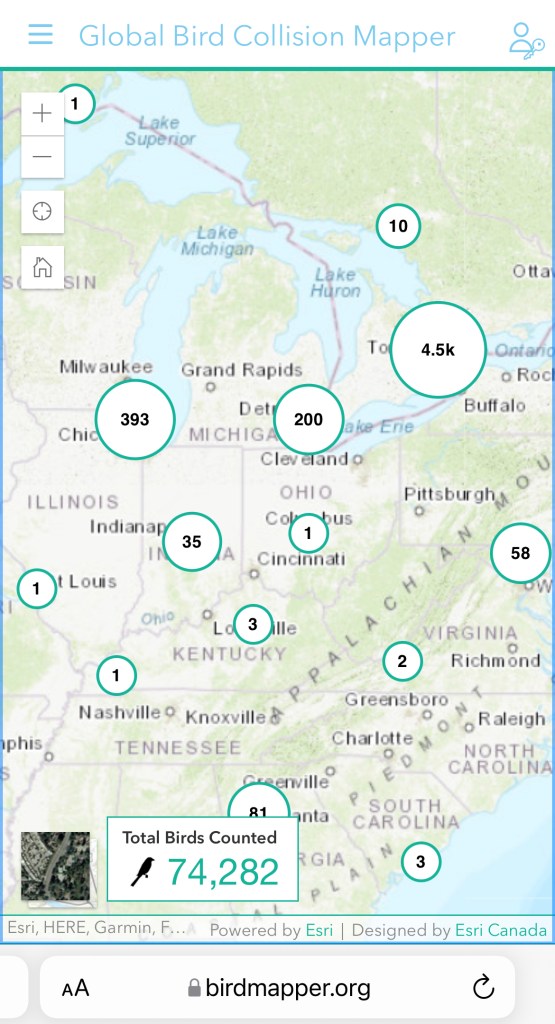
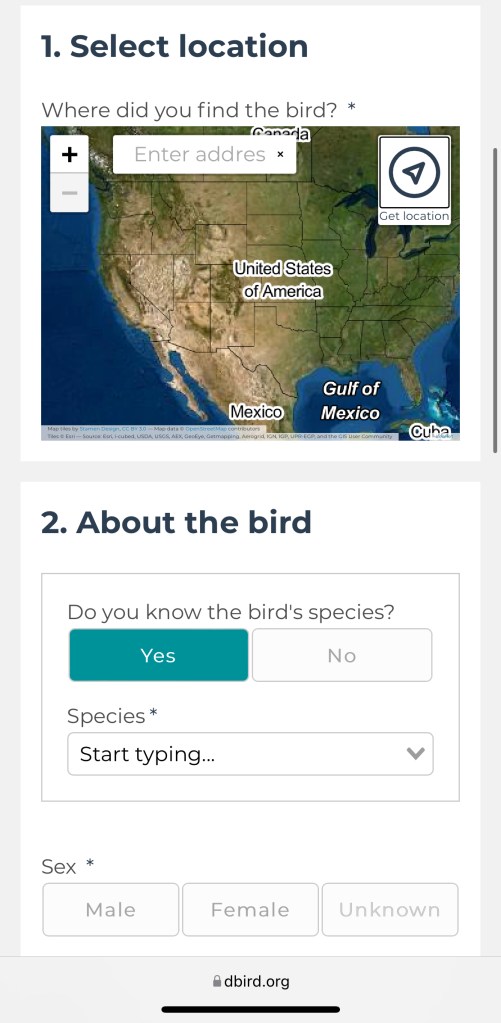
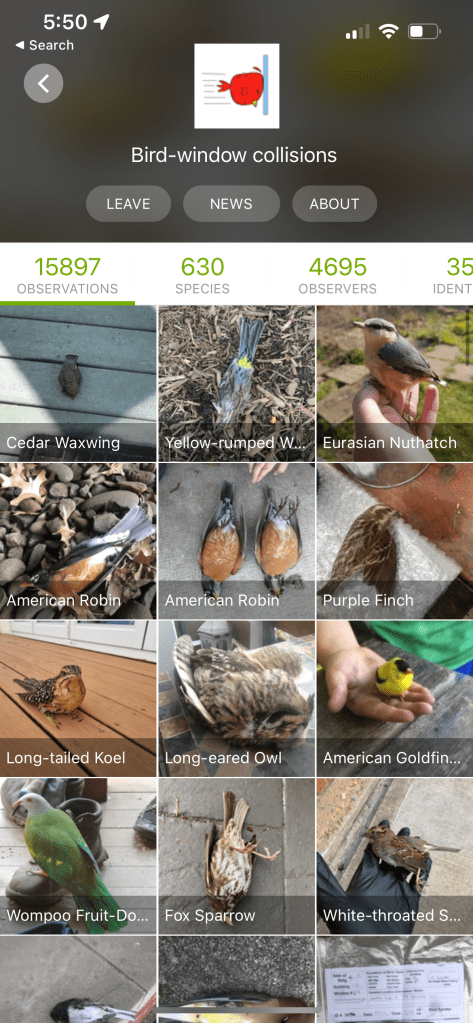
If you use regular routes in your daily life, start surveying them for dead birds. The data will be most useful if it is consistent rather than sporadic. It is very important to know that you cannot and should not handle dead birds. It’s illegal to possess them without a permit, and diseases such as bird flu can be spread to us from birds. Sometimes I move them from the sidewalk to grass, but if you do this please wear gloves and wash your hands immediately after.
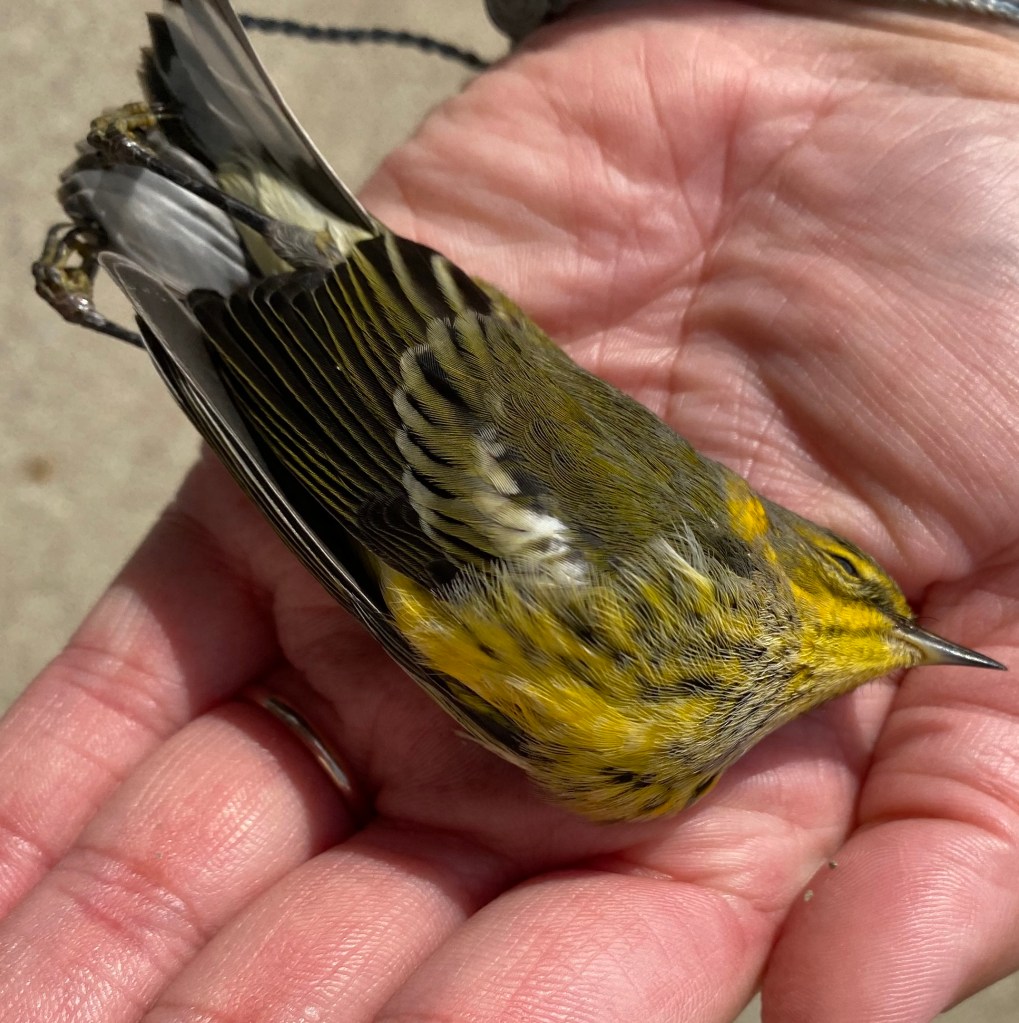
Another thing we can do is try to make change in our workplaces. I’ve helped coworkers and family members document and write letters to leaders in their organizations outlining the problem and asking for a solution. Who doesn’t want to work for organizations whose values align to their own? I wish I could say we were successful, but at least we tried.
My last recommendation is one I have no experience with, but I’m planning to start today. Several major cities have recently passed or proposed local laws to ensure future buildings are safer for birds. Toronto was the first major North American city to require all new construction to be bird safe. New York City has a similar law passed in 2020. This year, in Washington DC, a similar law was proposed by their city council. I plan to contact my Detroit city council person today, and urge you to contact yours.
I also have to tell you the number one killer of birds is domestic cats. Cats kill billions of birds each year.
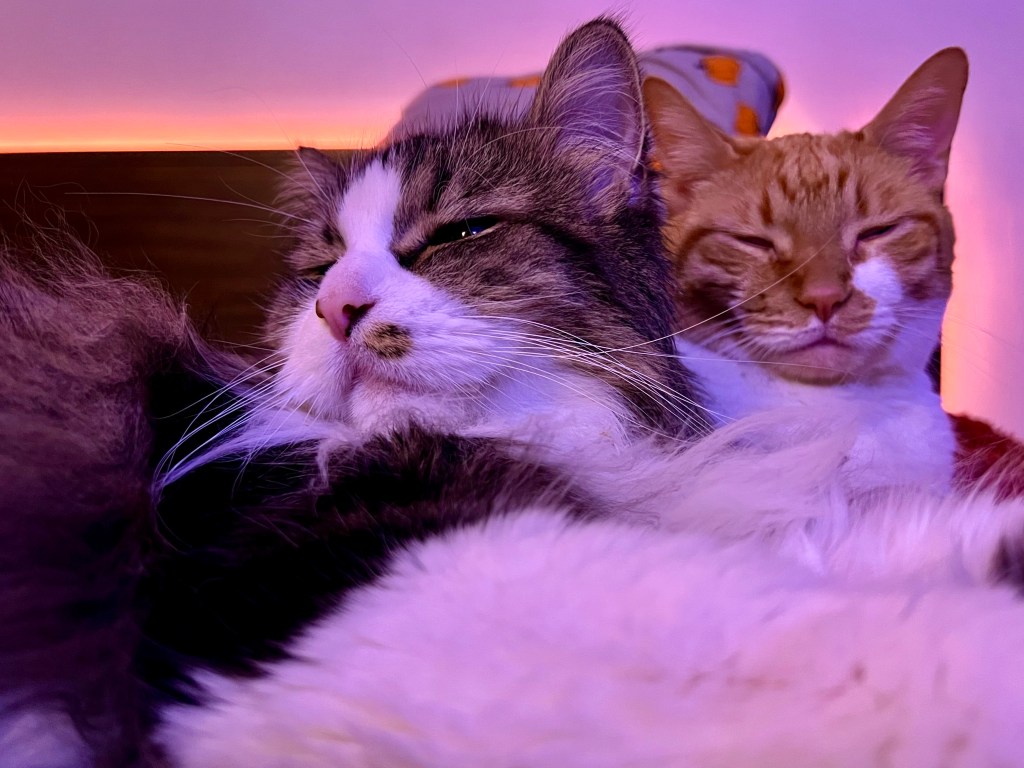
Please, keep your cats inside to help save birds.
If you find an injured bird, please contact a licensed rehabber immediately. Around here, that ‘s pretty much only Bird Center of Michigan, who does amazing work and Howell Nature Center. I love you all but please do not contact me, I can’t help.
If you have any other suggestions or if I’ve missed something, please leave a comment. There is a full page flyer available for easier reference available here. If you want to support my work please consider joining my Patreon.
 feraldetroit.com